

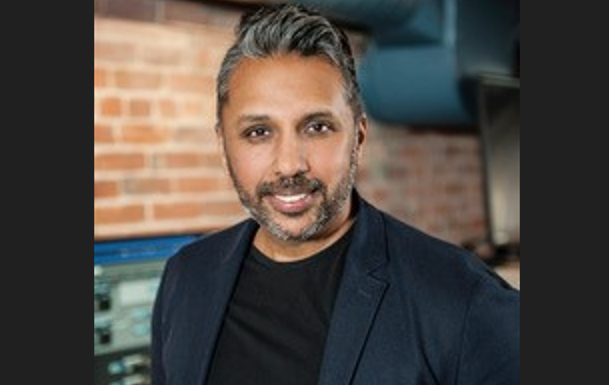
Dr. Danny Goel earned his medical degree and a Master’s in Science from the University of Manitoba. He then pursued his Orthopaedic Surgery training at the University of Calgary. Dr. Goel is shoulder fellowship trained from both Western and Harvard Universities. He has also trained in complex shoulder tendon transfers at the Mayo Clinic, Rochester, MN. Dr. Goel’s practice includes all aspects of arthroscopic and reconstructive shoulder surgery. He is a member of the the Royal College of Physician and Surgeons of Canada and is Board Certified under the American Board of Orthopaedic Surgery. Dr. Goel’s research and clinical interests include surgical education and skill acquisition. He is also the CEO and Founder of PrecisionOS, an immersive medical education software company.
OPN: Your research and clinical interests include surgical education and skill acquisition. Could you tell us more about your current research and the results?
DG: Most of my research energy right now is focused on a simple but stubborn problem: surgical skill has always been taught and assessed subjectively where an attending’s impression of how a resident performed, rather than an objective measurement. Through PrecisionOS, we’re using VR simulation to generate real, granular performance data, instrument trajectory, error patterns, decision timing and comparing it against benchmarks set by experienced surgeons. Early findings are encouraging: simulation performance correlates meaningfully with real-world readiness, which suggests we can start giving trainees objective, individualized feedback far earlier and more often than the traditional apprenticeship model allows. We’re continuing to validate that correlation across more procedures and larger cohorts.
OPN: Your work at PrecisionOS lets trauma surgeons and residents rehearse fracture fixation procedures — plates, screws, nails, external fixators — using the actual implant systems from device manufacturers, not generic simulations. What could your training methods mean to help support orthopaedic training and surgery and what will be the effect on patient experience and their recovery post surgery?
DG: Residents today get fewer hands-on reps than any generation before them due to shorter duty hours, higher case complexity, and faculty who don’t have the time to supervise and give feedback on every case. Rehearsing with the actual implant systems they’ll use in the OR, not a generic stand-in, means the first time a resident encounters a specific nail or plate system isn’t in a real patient. The logical extension, and what we hope to keep demonstrating as our data matures, is that better-rehearsed surgeons make fewer intraoperative errors, move more efficiently, and that translates into a smoother experience and recovery for the patient. I’d rather be precise than promotional here: we have strong evidence that simulation improves technical performance and readiness which will have an impact on patient outcomes.
OPN: What are your thoughts on the advancing involvement of AI and 3D technology used in training, surgery and patient care?
DG: I’m genuinely optimistic about it, with one caveat I feel strongly about. AI is very good at connecting information that used to live in disconnected silos, i.e. what a trainee has studied, practiced, and performed, all read as one picture instead of three separate systems that never spoke to each other. That’s where I think the real near-term value is, in training and in surgical planning. Where I think the field needs to be careful is treating AI as a decision-maker rather than a source of evidence empowering the physician. AI is genuinely bad at predicting complex human behavior and judgment in isolation, the research on this is pretty consistent, so in everything we build, the human stays the one making the call. AI surfaces the evidence; the surgeon or program director still makes the decision. 3D and AR-assisted visualization for preoperative planning is the other area I think will keep maturing quickly and become standard rather than novel.
OPN: What’s the best part of your job?
DG: Hearing about how residents (and in some occasions even surgeons) go from being hesitant to confident on a procedure, and knowing the tools we developed played a part in that. It’s the same satisfaction I got from teaching in the OR, now it’s just at a scale I could never reach as one surgeon.
OPN: … and the worst?
DG: