

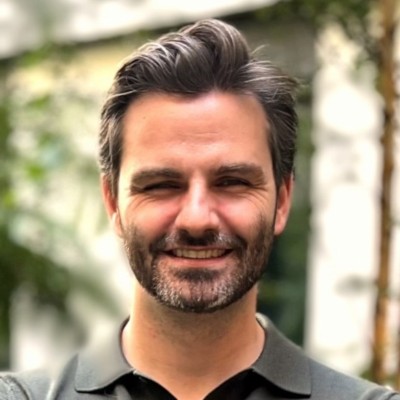
Olly Morgan is Co-Founder & CEO of Vitalis Ortho. His career has taken him from academic research and engineering to building and leading start-ups. Having worked across academia and industry, including at orthopaedics giant Stryker and start-up Meshworks Implants, which was acquired in 2025, he brings experience of taking orthopaedic innovation from early research through to commercial reality.
OPN: What drove you to make the journey from researcher and engineer to start-up founder? Tell us more about your career.
OM: I was fortunate to have two brilliant PhD supervisors, Rajshree and Howard Hillstrom, who were deeply committed to their work and instilled in me both a rigour for research and early exposure to industry. Academic research was rewarding, and I had the opportunity to work with leading experts as a visiting researcher at the Hospital for Special Surgery, but I wanted to see my work translate into tangible impact for patients.
That ambition, combined with a strong interest in design and engineering, led me to Stryker, where I designed custom implants for extreme orthopaedic disorders such as osteosarcoma and complex reconstruction after failed joint replacement. I learnt a huge amount technically, but also recognised that a large corporation wasn’t the environment where I’d flourish.
So I joined early-stage start-up Meshworks as one of its early engineers. That’s where I met my now business partner, Mac Tuncer, who founded the business. Together, we scaled Meshworks into one of the UK and Ireland’s leading providers of personalised, 3D-printed orthopaedic implants. I ultimately moved into a more commercial role, helping to lead the business through to its acquisition in 2025.
OPN: What motivated you to launch Vitalis Ortho?
OM: My academic work in orthopaedics focused on joint-preserving surgery and technologies for osteoarthritis, including techniques like osteotomy and joint unloading. My industrial career, conversely, was predominantly focused on developing implants for complex reconstruction after failed joint replacement.
Those two very different experiences gave me a clear view of what can go wrong along a patient’s journey, particularly for younger patients where established clinical pathways offer limited options between pain management and joint replacement. Vitalis Ortho was founded on the conviction that the window for meaningful intervention exists years before irreversible surgery becomes the only option. Our goal is to make joint preservation the default for younger patients, not the exception.
OPN: What are the realities of commercialising orthopaedic innovation and how could it benefit the patient experience in the future?
OM: The reality is that most orthopaedic innovation moves slowly. Any new implant has to prove its safety and efficacy through a complex regulatory pathway, often over several years, before it ever reaches a patient. That means founders need patience, resilience and discipline. Capital is significantly harder to secure than in many other sectors, timelines are longer and the standard for proof is higher.
But when a new technology does make it to market, the impact can be significant. For patients, particularly younger ones facing a lifetime of pain management before an eventual joint replacement, earlier and more targeted intervention could fundamentally change their trajectory. Rather than waiting until damage is irreversible, we have the opportunity to intervene while a joint can still be preserved, keeping people active for longer and delaying or even avoiding major surgery altogether. I think that move towards preserving function earlier is where some of the biggest opportunities in orthopaedics lie.
OPN: Are you currently involved in any research projects? If so, could you tell us more about it?
OM: Yes, we’re currently working with Imperial College London to research the mechanical and in-vitro performance of our technology. The collaboration allows us to stress-test the device before we move into the next stage of clinical development. Working with Imperial also helps us build the initial evidence base we’ll need as we progress through regulatory and clinical milestones.
OPN: You recently completed the UK’s only accelerator dedicated exclusively to MSK innovation. What did you gain from the programme, and how has it helped you develop Vitalis Ortho?
OM: The MSK Innovation Accelerator delivered real value for our business. Over six months I had access to masterclasses and one-to-one mentoring from people who’ve actually built MedTech businesses, not just advised on them. What really sets the programme apart is that it’s specifically focused on musculoskeletal innovation, so the expertise and networks are highly relevant to the challenges we’re trying to solve.
The cohort included founders at every stage, from early concept through to those already building commercial pipelines, and being able to pressure-test ideas against that peer group was incredibly valuable. It exposed gaps in our own strategy and forced me to rethink how we tell our story.
We also gained access to experts across the MSK ecosystem, including industry leaders and renowned orthopaedic surgeons. Those relationships have continued beyond the programme itself, and our relationship with ORUK ultimately fed directly into our £1.2m pre-seed round, with ORUK participating in the investment.
OPN: What advice for researchers considering taking their own innovations to market?
OM: Research is only one piece of the puzzle. Academic training teaches you to dissect a problem and communicate your methodology in a very specific way. When you’re speaking to investors, you need to learn how to tell a compelling story rather than present a scientific paper. That’s a different skill, and an important one.
If commercialising your research is the ambition, I’d also recommend getting direct experience in a commercial setting as early as possible and seeking out people and programmes that can challenge your thinking. You don’t have to figure everything out yourself. Programmes like the MSK Accelerator can give you access to people who have built businesses, understand the clinical and commercial landscape and can help you spot the gaps you might not see yourself.
And learn how to sell. I can tell you from personal experience that selling is harder than building the product, and it’s the part academics and researchers tend to see least of, which is exactly why so many underestimate it. No one hands you a business for having the best science. You have to go and build one.
OPN: What’s the best part of your job?
OM: The pace. Look back six months in a start-up and you’re looking at a different business entirely. The technology might look different, the team may be bigger and the business may be in a much stronger position than you ever expected. Seeing that progress is incredibly fulfilling.
OPN: … and the worst?
OM: There’s no “worst”, but some days are harder than others. Securing investment is tough at the best of times, and particularly tough in the current environment, where so much investor attention is focused on artificial intelligence. It takes real conviction and resilience to hear “no” for months on end. But that one “yes” makes it all worthwhile.
OPN: What’s next for Vitalis Ortho and the wider orthopaedic innovation landscape?
OM: Our design is now moving into its first round of manufacturing, producing physical units ahead of cadaveric surgical trials. That’s the next critical step in de-risking the device before regulatory submission and, ultimately, first-in-human use.
It’s an exciting stage because this is where the technology starts to move from a concept into something tangible. There’s still a long journey ahead, but we’re getting closer to being able to demonstrate what it could mean for patients.
