

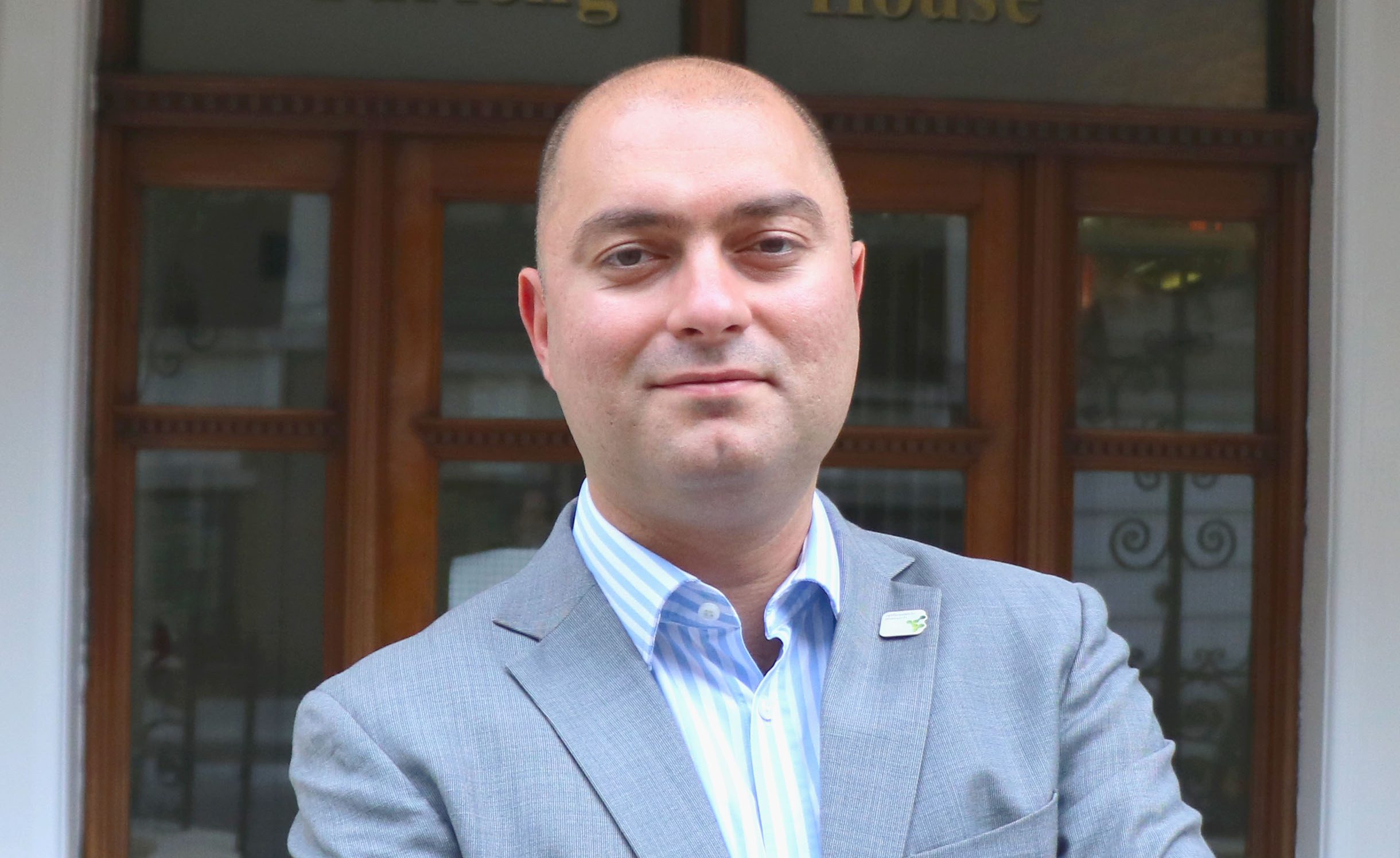
Arash joined Orthopaedic Research UK in 2008 and became Chief Executive in 2016. Since then, he has been instrumental in shaping the organisation’s strategy and driving its growth, with a focus on strengthening governance and expanding its research, education, and innovation programmes.
An agile and collaborative leader, Arash is passionate about forging strategic partnerships across the musculoskeletal community to accelerate innovation and create meaningful impact in society. He holds a PhD in Medical Engineering and an MBA in Management, and serves as a trustee of the British Orthopaedic Research Society (BORS) as well as a member of the research committee at the Bone and Joint Infection Society (BAJIS).
OPN: What drove you to choose a career in orthopaedic research?
AA: As a trained medical engineer, musculoskeletal health was a natural area for me to focus on – it’s where engineering principles can make a real and direct difference to patients’ lives. A good friend of mine, who worked in the field, encouraged me to explore it further, and that sparked my interest in pursuing a career dedicated to MSK research and innovation.
OPN: Imperial College London and Orthopaedic Research UK have recently launched the latest iteration of the MSK Innovation Accelerator, the only UK programme dedicated to tackling bone, muscle and joint health. Could you tell us more about it?
AA: This is now the third year of the programme, and we’ve built it very much around what researchers tell us they need. We know from researchers that they value training in business and entrepreneurial skills. The MSK Innovation Accelerator is designed to help them accelerate the development of their innovations and to create and scale their early-stage ventures across the UK. It involves a 6-month intensive learning journey, providing participants with entrepreneurship training, masterclasses and access to expertise from the team at Imperial College London. At the end of the programme participants have the opportunity to pitch their idea to an expert panel, with the potential of securing a £100k investment from our charity.
OPN: How could the programme help reshape MSK care and the patient experience?
AA: There is a huge need for innovation to support those living with poor MSK health and to help prevent others from developing disabling MSK conditions. We need our smartest clinicians, engineers and scientists to put their brilliant minds together to solve MSK health challenges, and we need to help entrepreneurs bring their innovations to the market faster for the benefit of patients.
OPN: Are you currently involved in any research projects? If so, could you tell us more about their focus?
AA: We are one of the significant funders of MSK health research and the only charity to cover all MSK conditions. We invest around £1m on a wide range of research projects and attract additional (co-funding) from partners including leading academic institutions, medical charities and commercial companies. We are also investing in research into the MSK innovation ecosystem to better understand how we can support and encourage a new generation of MSK innovators.
OPN: How does the future look in improving MSK care?
AA: Technology is already transforming MSK care. AI is improving the accuracy of imaging analysis; motion capture is helping clinicians to plan procedures more effectively; VR is being trialled as an alternative to traditional pain relief; and wearable devices are empowering patients to take control of their rehabilitation. These are exciting developments, but we are only at the start of a technological revolution in MSK health. To meet the enormous demand, we need an even wider and faster pipeline of innovation.
OPN: What’s the best part of your job?
AA: Partnership with the UK’s leading MSK clinicians, scientists, charities and NHS leaders, and working together on how to improve the lives of millions of people living with MSK conditions. Seeing partnerships form and ideas turn into real-world impact is deeply rewarding.
OPN: … and the worst?
AA: The sheer scale of unmet need. Knowing how many people live with pain and disability, and how long it can take for promising innovations to reach patients, is both sobering and motivating. It reminds me why the work we do at ORUK is so urgent.
OPN: What has been the highlight of your career so far?
AA: Leading ORUK through a period of growth and change has been a privilege. Launching the MSK Innovation Accelerator and seeing it already produce tangible ventures and collaborations has been a particular highlight – it shows how quickly ideas can translate into impact when the right support is in place.
OPN: Are you planning to attend or speak at any medical conferences or events over the next year?
AA: I’ll be contributing to several MSK and orthopaedic meetings over the next year, and I’m particularly looking forward to sharing the results of our research into the MSK innovation ecosystem once they’re available.
OPN: If you didn’t work in the health industry, what would you be?
AA: I would probably be in corporate finance. I’ve always been interested in strategy, investment and building organisations, so it’s likely I would have followed that path had I not committed to the health sector.
OPN: What advice would you tell your 21-year-old self?
AA: Be curious, be bold, and seek out advice early. And don’t be afraid of failure – it’s often the quickest way to learn.
OPN: How do you think the future looks within the field of orthopaedics and what are your predictions for 2025 and the next decade?
AA: We’ve been encouraged by the NHS 10-year Health Plan’s emphasis on prevention, and by the Life Sciences Sector Plan, which acknowledges the barriers to health innovation and proposes practical solutions. This dual focus on prevention and innovation could transform the way we address the MSK health crisis. Looking ahead, I expect to see more personalised, data-driven care, new models of prevention, and greater use of digital and regenerative technologies. By 2035, my hope is that we’ll look back on this decade as the moment MSK health finally became a central priority in healthcare policy and practice.
Applications for the MSK Innovation Accelerator are open until 28th September 2025. The programme is seeking early-stage innovators with ideas that can improve bone, muscle or joint health. It is fully funded, equity-free, and open to applicants from all backgrounds. For more information and to apply, visit medtechsuperconnector.com/programme/open-programmes.
Image: Submitted by the author
