

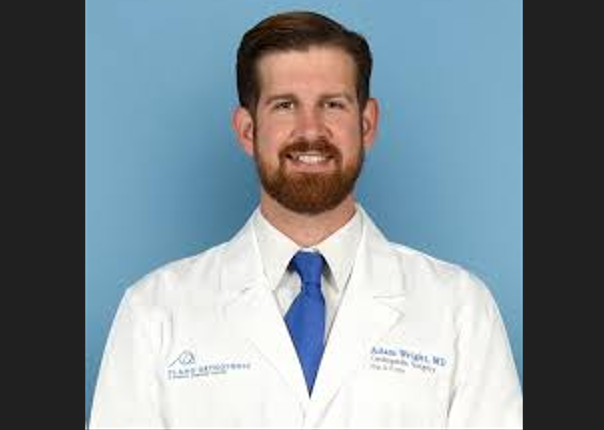
Adam Wright, MD, is a board-certified orthopaedic surgeon in Plano, Texas, specializing in minimally invasive hip and knee replacement. He completed his residency at Baylor Scott & White Hospital and fellowship training at the Tahoe Arthroplasty Fellowship. Dr. Wright is a co-author of “Effects of single-use negative pressure wound therapy on healthcare use: US analysis of a large claims database” and participates in medical missions providing joint replacement care to underserved patients.
OPN: What drove you to choose surgery as a career – and minimally invasive hip and knee replacement surgery in particular?
AW: I love helping patients get better quickly, that is why I picked surgery as a profession. In hip and knee replacement surgery, patients often come into the office depressed and discouraged that they can no longer participate in the activities that bring them joy. With modern techniques we, as surgeons, can restore function and quality of life faster and more effectively than we could even 10-20 years ago.
OPN: You recently co-authored a comparative study of single-use negative pressure wound therapy (sNPWT) devices in orthopaedic and cardiovascular surgery. Could you tell us more about your research and the results?
AW: Our study was the first to directly compare two single-use negative pressure wound therapy (sNPWT) devices – PICO◊ sNPWT (-80mmHg) and PrevenaTM(-125mmHg) – using a large real-world dataset across orthopaedic and cardiovascular surgeries. Our goal was to see whether clinical outcomes and healthcare costs differed between the devices.
We found that the PICO device significantly reduced wound dehiscence rates, shortened hospital length of stay, and lowered overall costs compared to Prevena TM . In cardiovascular surgery, we saw a nearly 60% reduction in wound dehiscence rates and 64% reduction in orthopaedic surgery. We also found length of stay was affected; there was nearly a 30% reduction in orthopaedic surgery and 9% reduction in cardiovascular surgery.
Our study results highlight that device design and mechanism of action can have a real impact on patient outcomes and healthcare resource utilisation. By using PICO sNPWT prophylactically in high-risk patients, we can improve surgical success rates, reduce complications and support better overall care. To get better outcomes and reduce the cost of care is a homerun in my opinion
OPN: What could your findings mean to help support orthopaedic surgery and what will be the effect on patient experience and their recovery post surgery?
AW: Our findings show the prophylactic use of PICO sNPWT in orthopaedic surgery can significantly reduce wound complications, which has a direct impact on both patient recovery and healthcare efficiency. For patients, preventing surgical site complications can mean less pain, improved mobility, earlier return to work, sports, and daily activities and overall better physical and emotional wellbeing.
The patient impact of reducing wound complications should not be underestimated. If we, as healthcare professionals, can prevent the majority of SSCs, that’s a benefit to the healthcare system and more importantly to the patients quality of life.
OPN: Do you have any more research in the pipeline?
AW: There is always room for more research, refining our techniques, indications, and devices used to improve patient outcomes. The data is clear that NPWT improves wound results, but it might even contribute to patient satisfaction or happiness with their care which would be interesting to look at.
OPN: What are your thoughts on the advancing involvement of AI and 3D technology in surgery and patient care?
AW: Like any other field, AI and technology is here to stay and has an evolving role. Even over my short career I have seen AI grow leaps and bounds in capability. In our office we use it to help with documentation and it has been a significant expediter to the charting work I had to perfrom every day. At some point I am sure large models will analyze our surgeries, outcomes, techniques, and will rank us or at least provide good data on which strategies work best for each patient. I do not believe robots will replace us as surgeons anytime soon, but I hope that robotics and AI can provide guardrails to make the average surgeon a great one and improve efficiency and the end result for pa